Based on the rich evolution of the folding screen, Paravent OS categorizes screens into three distinct groups. Table screens, 卓屏 (zhuoping), are positioned on tabletops, conveniently within arm’s reach, and operate as interactive widgets responsive to both touch and gaze input. Folding screens, 折屏 (zheping), unfold at eye level to provide information or immersion and respond to gaze, gesture and tabletop hardware input. Surrounding screens, 围屏 (weiping), serve as ambient panels for informative or artistic purposes and build a relation with the surrounding architecture.
Paravents have been around us for thousands of years. Originating from the Zhou dynasty in China, the folding screen has a dual nature as a functional and artistic object. As with the coming of the spatial computing age, we’re looking for natural ways to display and interact with digital layers in our environment. Paravent OS further explores the evolution of the folding screen into a familiar and spatial OS for the workplace.
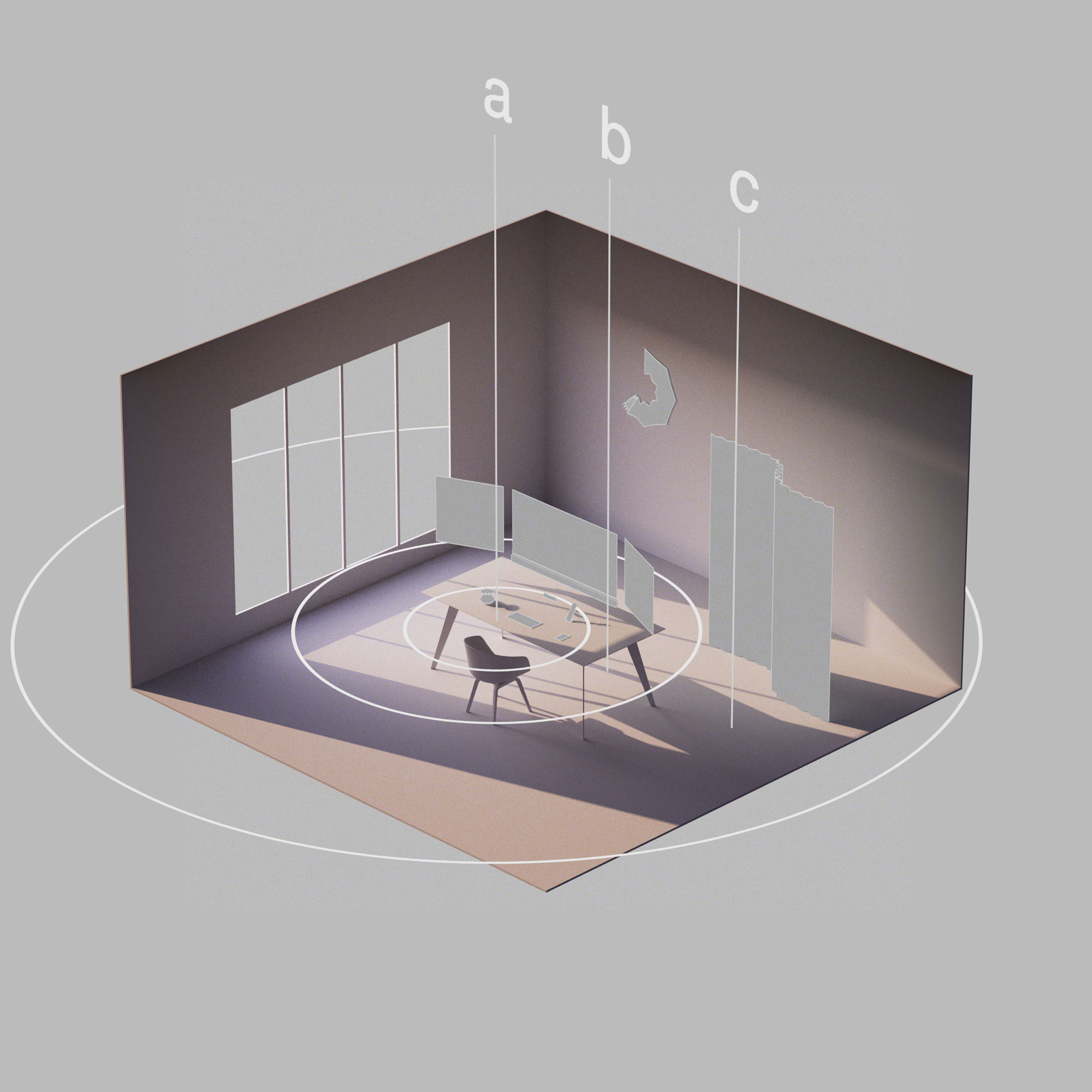
“Flat, foldable and spatial”
Reader
The Reader floats at eye level. It formats a page to show just the relevant text and images, allowing you to concentrate solely on reading. The unfolding of the article itself simply shows the remaining length. The folding screen here keeps its dual nature as both an artistic and functional object, turning reading into a spatial act rather than a flat task on a monitor.
No close-, but fold buttons
All paravents have an elegant folding mechanism, allowing panels to fold into themselves while maintaining spatial harmony. This principle avoids abrupt disappearance. Instead of closing a window and erasing its presence, the interface folds away with the same quiet material logic that generated it in the first place.
“The folding screen has a dual nature as an artistic and functional object”
Landscape memory
Around the 10th century, as landscapes became a popular painting motif, screens followed the same course. Imagine sitting with your friends next to a screen showing off a mountain view and feeling as though you were already there. In Paravent OS, surrounding screens immerse you through a personal collection of landscape photographs, taking you back to a moment. This feature translates that historical role of the screen into a spatial digital memory.

Eberhard Grossgasteiger, 2018.
The Chinese character for screen, Ping 屏, literally means “to shield or block”. The usual expanded compound word for the object is pingfeng 屏风, which means to screen from the wind. The word appears in writing as early as the Han dynasty, showing that two thousand years ago screens were already used to protect people from drafts. Even in the written form of the character, there is a relation to houses and buildings, suggesting a deeper spatial role than decoration alone.
Ambient Timer
Ambient timers are rotational folding paravents that snap onto walls in your room, unfolding slowly one fold at a time. Time is not only shown numerically, but expressed spatially through the transformation of the object itself. The timer becomes a quiet architectural event that lives in the background of a space.
To Do
The versatility of digital paravents lies in their ability to expand, stretch, shrink, or even reveal a fold within a fold, unlike their physical counterparts. This makes them capable of holding information in a way that remains spatially legible rather than purely stacked or layered. A to-do list can therefore occupy the desk as an unfolding surface rather than a conventional panel.
Breath
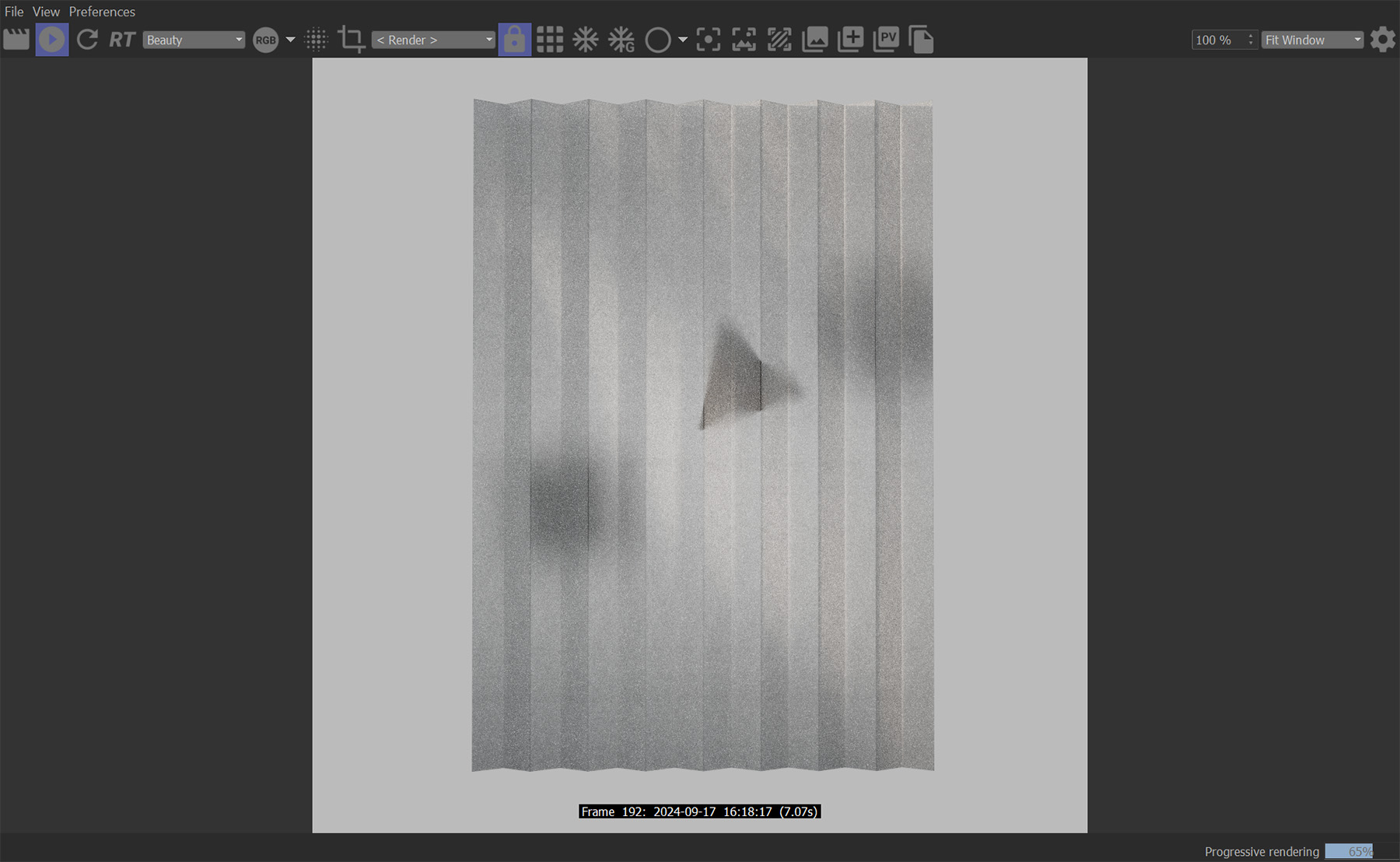
The relief surfaces of V-pleats will flex in many directions. One way to flex them is to bend the surface into a cylinder. This widget guides breathing exercises by filling and shrinking the volume, encouraging deeper inhales and slower exhales through a motion language that remains connected to the underlying fold logic of the system.
Calculator
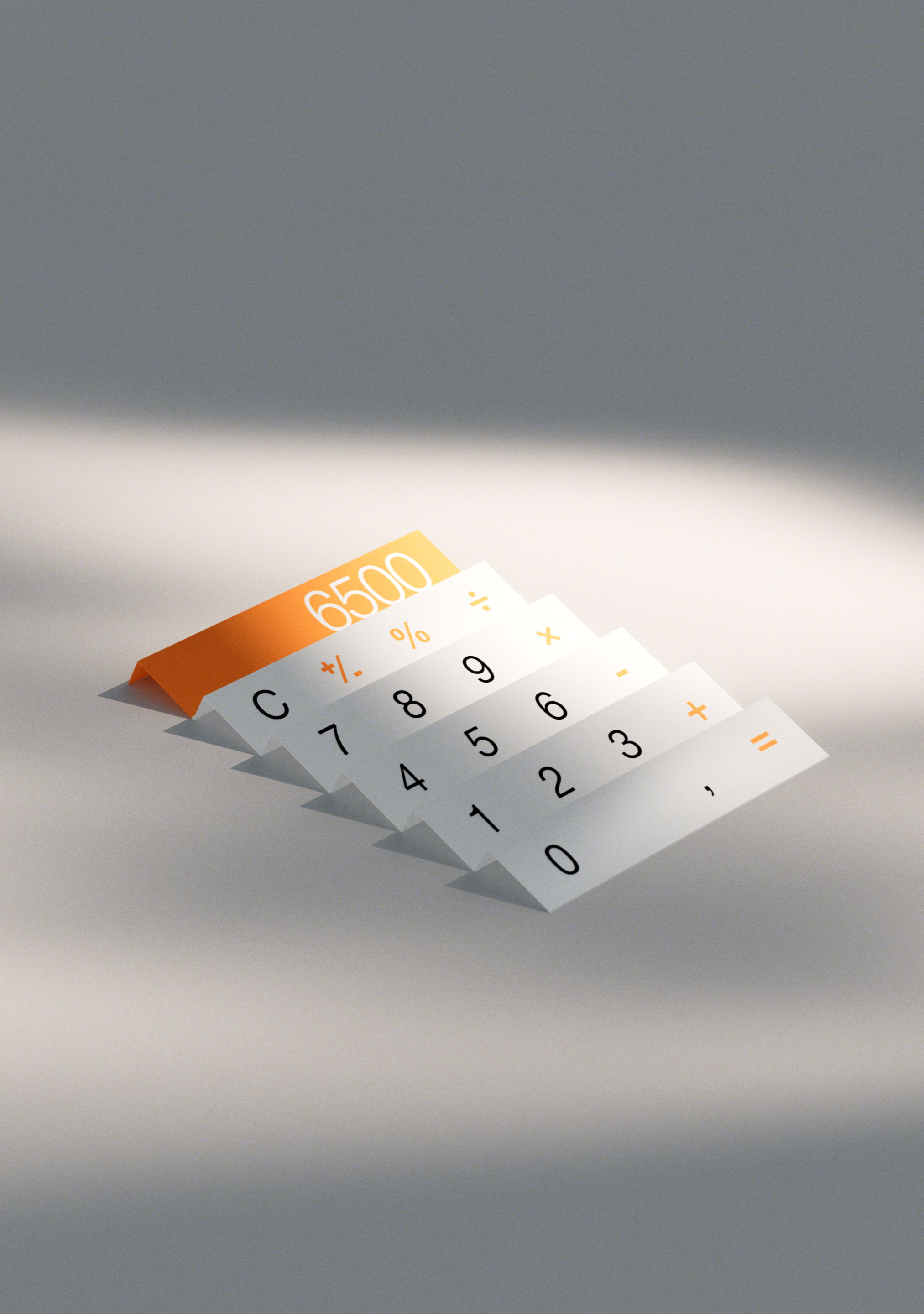
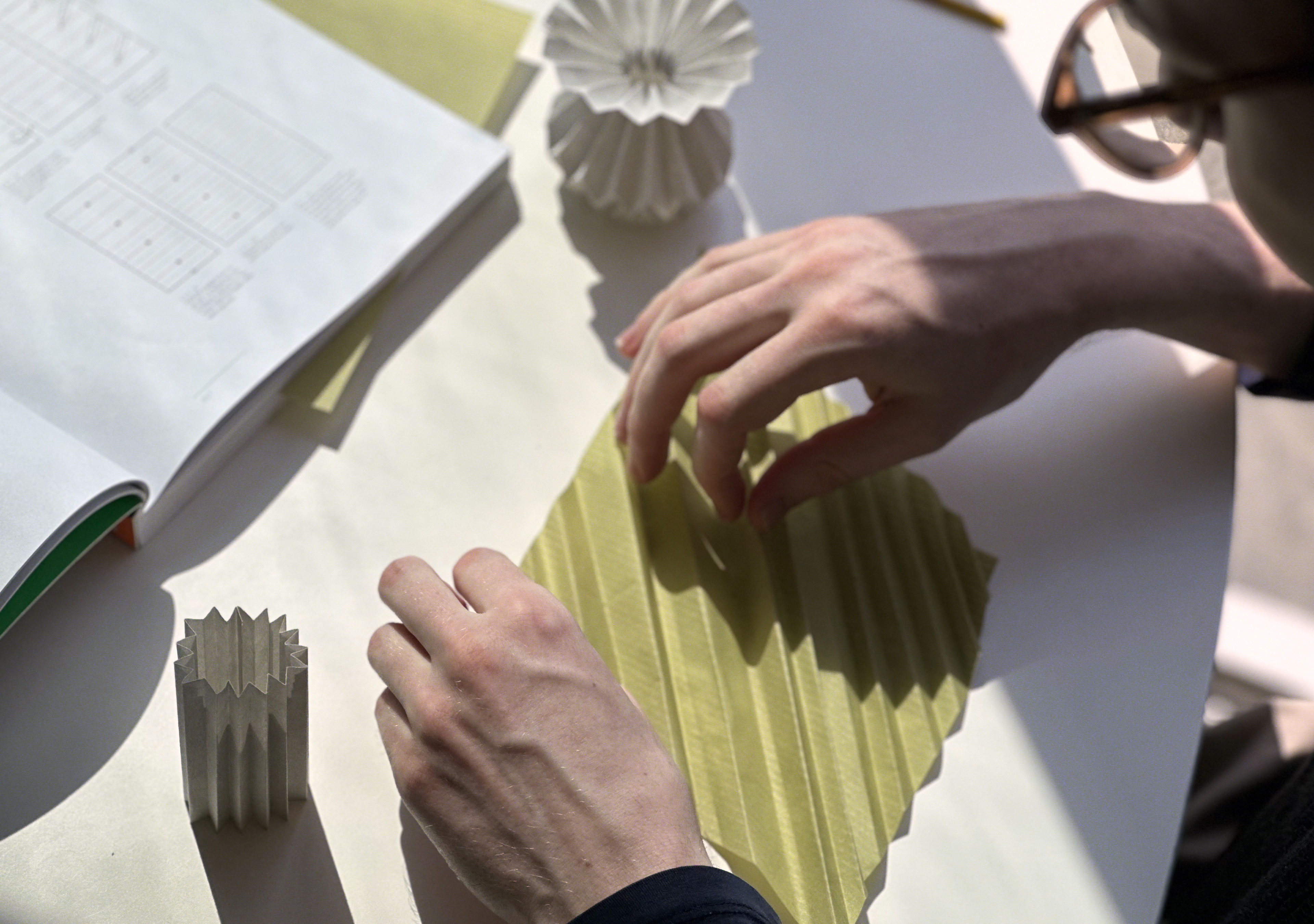
Key-like widgets such as the calculator and virtual keyboard are designed with knife pleats. They are simple mountain-valley pleats arranged in a linear sequence, yet the spacing between the mountain peaks is asymmetrical among the valley pleats, resulting in key surfaces that face you. The form is expressive, but still grounded in the physical logic of folding.
Reminder
Appearing from behind the tabletop, the reminder moves within arm reach and unrolls itself to present its content. The reminder uses a classic folding technique that requires rolling to open or close, turning a small notification into a quiet physical performance at the edge of the workspace.
Sources
1. Fondazione Prada Milano (2023). Paraventi: Folding Screens from the 17th to 21st Centuries
2. Jackson, Paul (2011). Folding Techniques For Designers: From Sheet to Form